
Enterprise AI Weekly #12
What is Markdown and why does it matter, Microsoft backs Agent2Agent, Mistral ships new models, Duolingo goes AI first, ServiceNow want to oversee AI in organisations and the Godfather of AI speaks.


Welcome to Enterprise AI Weekly #12
Welcome to the Enterprise AI Weekly Substack, published by me, Paul O'Brien, Group Chief AI Officer and Global Solutions CTO at Davies.
Enterprise AI Weekly is a short-ish, accessible read, covering AI topics relevant to business of all sizes. It aims to be an AI explainer, a route into goings-on in AI in the world at large, and a way to understand the potential impacts of those developments on your business.
If you’re reading this for the first time, you can read previous posts at the Enterprise AI Weekly Substack page.
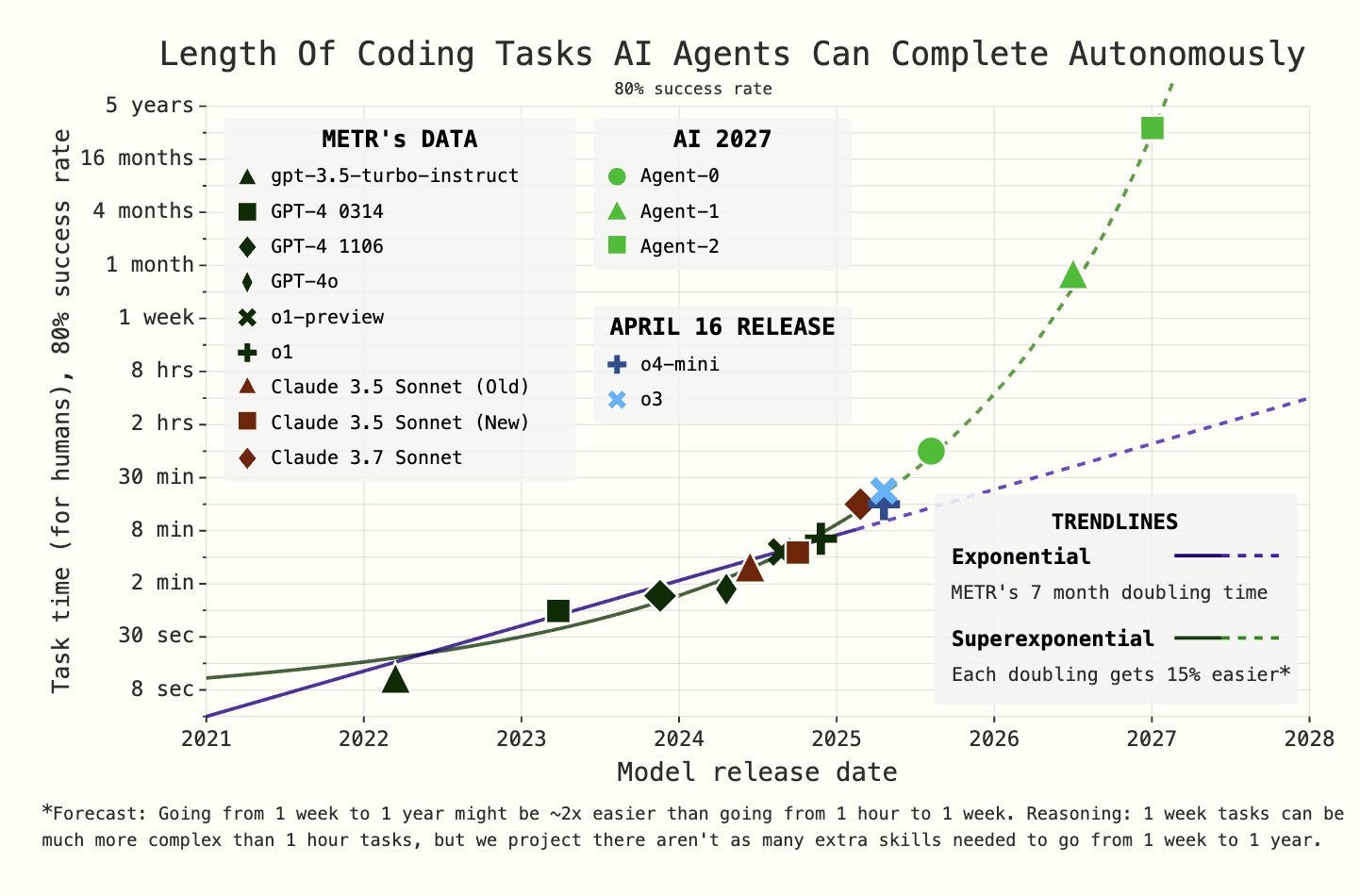
In EAIW #11 I covered the ‘AI 2027’ research-based AI scenario forecast. This week I came across one of the authors, Daniel Kokotaljo, on X. He mentioned in a post that ‘It's still way too early to call of course, but new data seems to be consistent with AI 2027's controversial super exponential prediction.’ and included an update to the graph which caught my attention in the original forecast, incorporating the latest model releases. I look forward to seeing how reality follows or diverges from the predictions over the coming months and years.
With that, let’s get started on another busy week in AI - I hope you enjoy #12.

Explainer: What is Markdown?
Markdown is a lightweight markup language created by John Gruber in 2004, with significant input from Aaron Swartz (yes, that Aaron Swartz). Its primary goal was to provide a simple, human-readable way to format text for the web, inspired by the conventions of plain text email and earlier markup languages like setext and atx. Unlike heavier markup languages such as HTML or XML, Markdown uses intuitive symbols to structure content, making it accessible for both technical and non-technical users. This simplicity and readability have led to its widespread adoption in blogging, documentation, and collaborative environments.
Markdown uses simple, memorable characters to apply formatting. For example, headings are created with one or more # symbols (e.g., # Heading 1), bold text with double asterisks (**bold**), and italics with single asterisks (*italic*). Lists are made with dashes or numbers (- for bullet points, 1. for numbered lists), links with [text](URL), and blockquotes with the > character. Code can be highlighted inline with backticks (`code`) or in blocks with triple backticks. Horizontal lines use three or more dashes (---), and images are embedded with . This syntax is intentionally minimal, making it easy to learn and use, while still supporting complex formatting needs.
In the age of artificial intelligence, Markdown has become even more critical. Codifying documents and diagrams into structured, machine-readable formats like Markdown significantly enhances the ability of LLMs to process, understand, and extract value from them. When information is consistently organised - whether as text, tables, lists, or even diagram descriptions - LLMs can more accurately interpret context, relationships, and key data points, reducing errors and ambiguity that often arise from unstructured or inconsistent inputs. This structured approach enables LLMs to automate complex tasks such as information extraction, summarisation, and comparison across different versions of documents, even when formats or layouts vary widely. For diagrams, providing a codified description (using a Markdown inspired structure such as Mermaid) allows LLMs to reason about the relationships and components involved, supporting tasks like generating explanations, converting diagrams to code, or integrating visual data into broader business workflows.
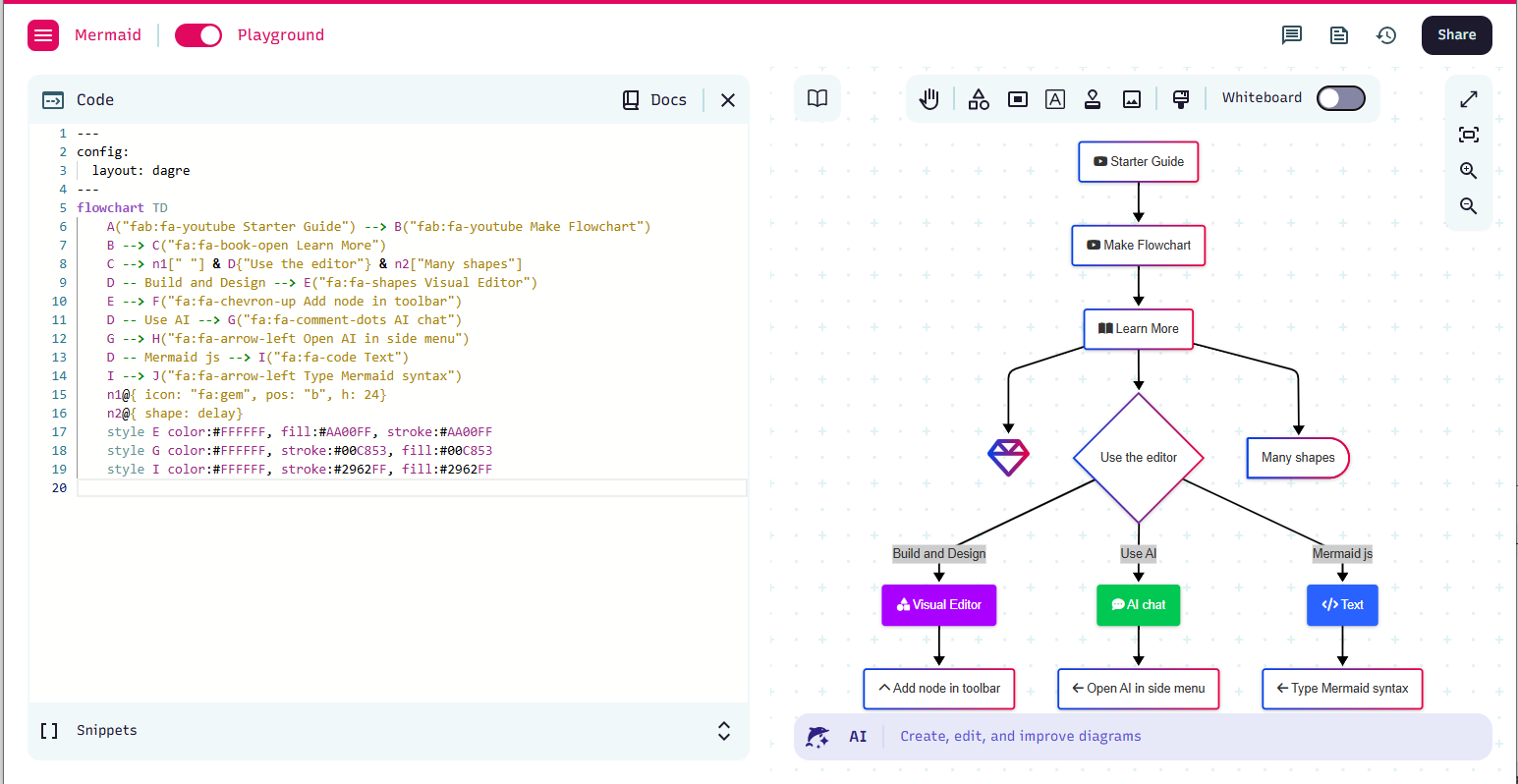
When we are frequently working with documents in formats such as PDF, tools like Marker allow conversion to Markdown, allowing AI systems to focus on the substance of the content, improving both the accuracy and efficiency of their responses.
For our business, adopting Markdown as a standard for documentation, AI prompts, and knowledge sharing will streamline collaboration across teams and enhance the effectiveness of our AI-driven workflows. By codifying our content in Markdown, we ensure that both humans and AI systems can easily interpret, modify, and repurpose information, leading to better communication, faster onboarding, and more consistent results across our digital initiatives. As we continue to integrate AI into our operations, Markdown will serve as a foundational tool that bridges the gap between human intent and machine understanding, supporting our mission to remain at the forefront of innovation.

1. Microsoft backs the Agent2Agent (A2A) protocol
In EAIW #8, I introduced Google’s Agent2Agent (A2A) protocol (formerly known as AgentSpace) and called it ‘a significant leap in AI agent interoperability and development’. A2A just got levelled up!
Microsoft has announced in a blog post that it will adopt the open new industry standard, which is designed to enable seamless communication and collaboration between AI agents across different platforms and ecosystems. This move brings A2A support to Microsoft’s Azure AI Foundry and Copilot Studio, allowing agents developed on these platforms to interact with external agents - even those built with different tools or hosted outside Microsoft’s environment. Microsoft has also joined the A2A working group on GitHub to help shape the protocol and its tooling and has already added a Semantic Kernel sample in .NET and Python that shows two local agents scheduling a meeting and drafting an email over A2A.
The A2A protocol, introduced by Google in April, provides a secure, structured way for AI agents to discover each other, share tasks, and coordinate actions. Agents publish “Agent Cards” describing their capabilities and use standardised JSON-based messages to exchange context, instructions, and results. This approach enables agents to work together on complex, multi-step workflows without requiring custom integrations or direct sharing of internal data, supporting both immediate and long-running operations.
We’ve talked a lot about Model Context Protocol (MCP) in recent posts, you may wonder where the two standards sit in relation to each other. A2A and MCP are not direct competitors; they address different layers of the AI agent ecosystem and are designed to complement each other. A2A standardises how autonomous agents communicate and collaborate with each other - enabling peer-to-peer negotiation, coordination, and information exchange across potentially different frameworks or vendors. MCP standardises how a single agent interacts with external tools, APIs, and data sources - acting as a universal interface for tool integration, like a "USB-C for AI". In practice, MCP enables agents to access the resources they need, while A2A enables those agents to work together to solve complex, multi-step problems. For example, an agent might use MCP to gather data, then use A2A to coordinate with other agents to complete a workflow.
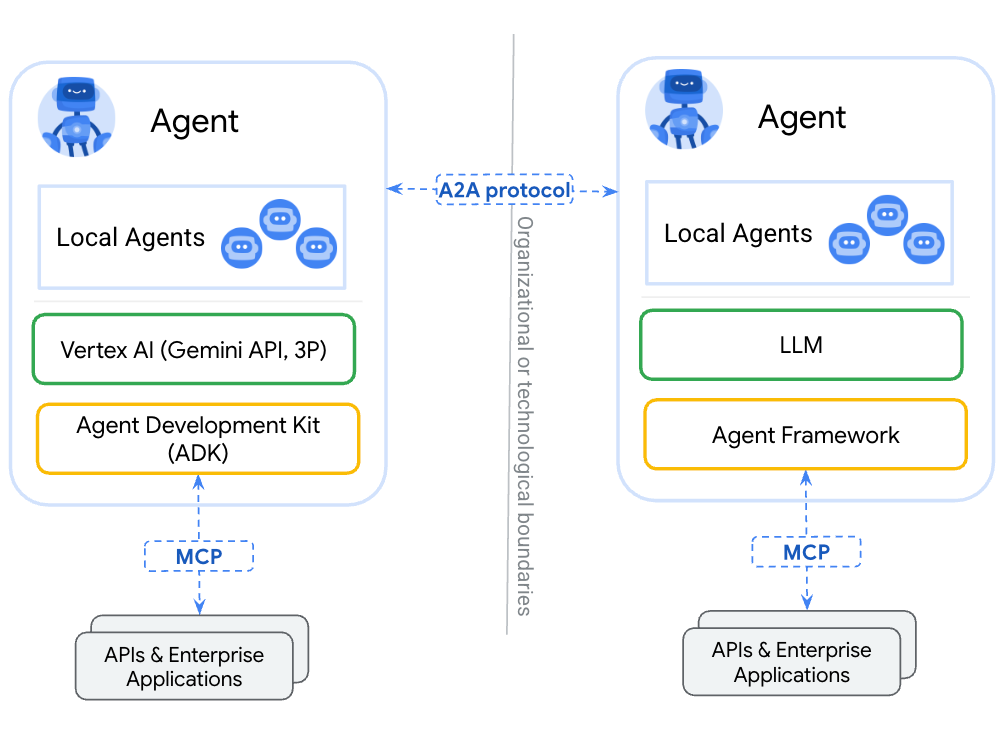
By supporting A2A, Microsoft and Google are laying the groundwork for a future where intelligent agents can collaborate across clouds, applications, and organisational boundaries. This interoperability is expected to accelerate the development of multi-agent systems that are more adaptable, observable, and capable of automating cross-functional business processes.
As we start building our agentic products, leading providers coalescing behind an open standard is invaluable. A2A will allow us to integrate best-in-class solutions from different vendors, streamline workflows, and reduce the friction of connecting new AI capabilities to our existing systems. Embracing this open standard positions us to build more flexible, collaborative, and future-proof AI-driven applications.

2. Mistral releases Medium 3, Microsoft to host Grok?
French AI startup Mistral AI has announced the release of Mistral Medium 3, a new AI model that sets a fresh benchmark for balancing performance and cost in enterprise AI. This model delivers state-of-the-art results at an impressive eight times lower cost than many leading competitors, while also simplifying enterprise deployment. Mistral Medium 3 particularly excels in coding and multimodal understanding and offers flexible deployment options - whether in the cloud or on-premises with as few as four GPUs.
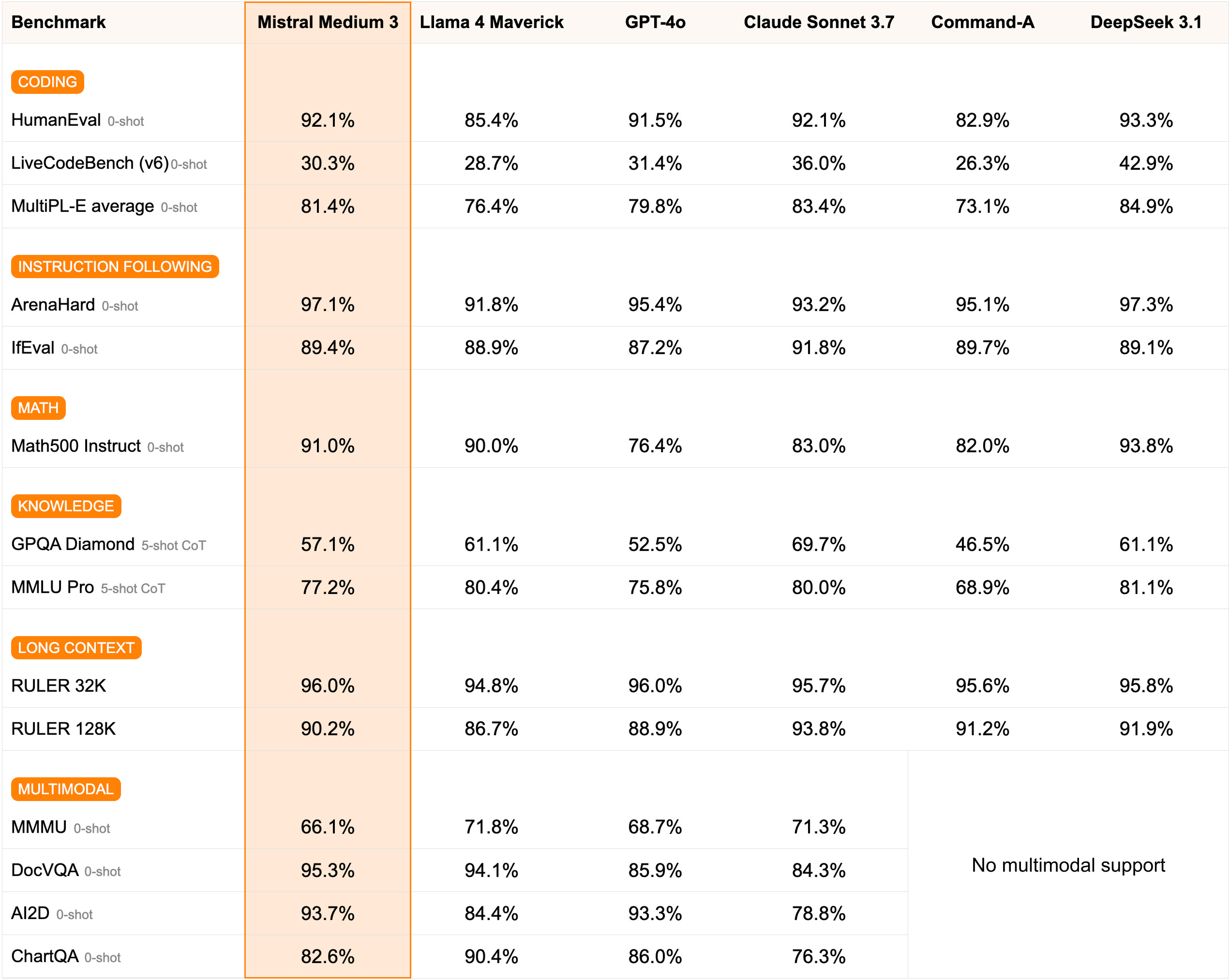
What truly distinguishes Mistral Medium 3 is its ability to deliver more than 90% of the performance of top-tier models like Claude 3.7 Sonnet, but at a fraction of the price. It outperforms open models such as Llama 4 Maverick and enterprise models like Cohere Command A, making it a compelling choice for organisations seeking both power and efficiency. The model also supports multimodal inputs, context lengths up to 128k tokens, and over forty languages, making it versatile for a wide range of enterprise applications.
For businesses, Mistral Medium 3 is designed with adaptability in mind. It supports custom post-training, seamless integration into enterprise tools, and can be continuously pretrained or fine-tuned for domain-specific needs. Early adopters in sectors like finance, energy, and healthcare are already leveraging it to enhance customer service, personalise processes, and analyse complex datasets.
Mistral also added this teaser to their announcement… “With the launches of Mistral Small in March and Mistral Medium today, it’s no secret that we’re working on something ‘large’ over the next few weeks. With even our medium-sized model being resoundingly better than flagship open-source models such as Llama 4 Maverick, we’re excited to ‘open’ up what’s to come :)”.
In other model related news this week, Microsoft is reportedly preparing to host Elon Musk’s Grok AI model on its Azure cloud platform, making Grok accessible to both developers and Microsoft’s internal teams via Azure AI Foundry. This move signals Microsoft’s continuing intent to diversify its AI offerings beyond OpenAI, further transforming Azure into a neutral hub for multiple leading AI models and intensifying competition in the cloud AI space.
Meanwhile, Google has launched an early access preview of Gemini 2.5 Pro (I/O edition), an upgraded version of its flagship model, ahead of Google I/O which kicks off on 20th May. This update brings significant improvements in coding, particularly for building interactive web applications, and now leads the WebDev Arena Leaderboard for web app development. The model also continues to excel in multimodal reasoning and video understanding, making it a strong contender for developers seeking advanced capabilities in both code and content creation.
The Mistral release is potentially relevant for our business as it presents a unique opportunity to scale our AI initiatives with a model that offers top-tier performance without prohibitive costs. Its flexibility and strong capabilities align with our goals to drive innovation, reduce operational expenses, and accelerate the integration of AI across our enterprise workflows.

3. Duolingo going AI-first, will replace contractors with AI
Duolingo has just announced a bold shift to become an “AI-first” company, marking a major transformation in the edtech sector. In a company-wide memo, CEO Luis von Ahn outlined that artificial intelligence will now be central to Duolingo’s product development, operations, and even hiring. This change is already delivering results: Duolingo launched 148 new AI-developed language courses in the past year - more than doubling its previous offerings and dramatically accelerating content creation. von Ahn’s memo highlights that AI will not just boost productivity, but fundamentally reshape how the company works, including phasing out contractors for tasks that AI can handle and tying employee performance to AI adoption.
Industry response has been swift and divided. Many observers praise Duolingo’s proactive approach and the speed at which it’s scaling new content, especially for underserved languages and regions. However, the announcement has also sparked concerns about job security, with some users and commentators expressing unease over contractors being replaced by AI and the potential impact on the unique, human-driven aspects of Duolingo’s learning experience. Despite these concerns, Duolingo’s financial outlook has improved, with increased subscriptions to its AI-powered offerings and a boost in its stock price.
von Ahn draws a powerful comparison between today’s AI transformation and the company’s earlier bet on mobile technology. Just as their early focus on building a mobile-first platform unlocked massive growth and set them apart from competitors, he believes that embracing AI as the core of their operations will be equally transformative. He emphasises that AI isn’t just a productivity tool - it’s essential for scaling content creation and enabling new features like video calls, bringing the quality of automated teaching closer than ever to the best human tutors. The memo also outlines concrete steps, such as gradually reducing contractor work in favour of AI, making AI skills a key hiring and performance metric, and ensuring all teams have specific initiatives to fundamentally rethink their workflows for an AI-first future.
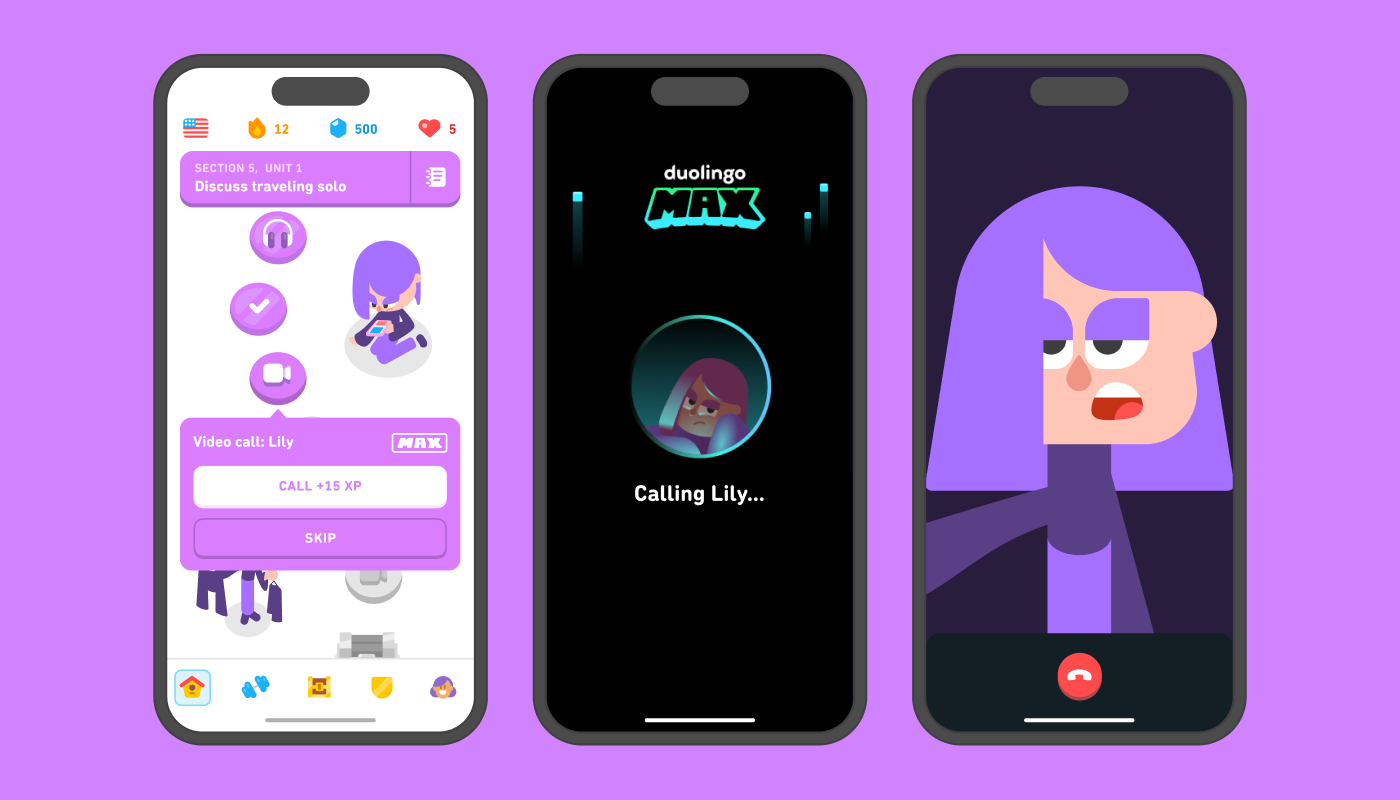
The statement “We will remain a company that cares deeply about its employees” is carefully emphasised, alongside assurances that employees will be supported as the company pivots its approach. “This isn’t about replacing Duos with AI. It’s about removing bottlenecks so we can do more with the outstanding Duos we already have. We want you to focus on creative work and real problems, not repetitive tasks. We’re going to support you with more training, mentorship, and tooling for AI in your function.”
For our business, Duolingo’s move is a clear signal that the AI transformation is not a distant future but an urgent present. Their approach - rapidly automating content creation, restructuring teams around AI, and making AI adoption a core performance metric - offers a valuable blueprint for us. As we navigate our own AI integration, this news reinforces the need to move decisively, rethink workflows, and ensure our teams are empowered with the right training and tools to leverage AI for both innovation and efficiency.

4. ServiceNow launches an ‘AI Control Tower’
ServiceNow has announced the launch of its AI Control Tower at Knowledge 2025, providing a new option for enterprise AI management. The AI Control Tower acts as a centralised command center, allowing organisations to govern, manage, secure, and extract value from any AI agent, model, or workflow - whether native to ServiceNow or from third parties - all within a single unified platform. This new solution is designed to optimise AI investments and ensure seamless, responsible integration into enterprise strategies, providing enterprise-wide visibility, embedded compliance, and real-time reporting on AI performance and business impact.
Alongside the Control Tower, ServiceNow introduced AI Agent Fabric, a new backbone for agent-to-agent and multi-model communication. This enables ServiceNow’s AI agents and those from partners like Accenture, Adobe, Cisco, Google Cloud, IBM, Microsoft, and others to collaborate dynamically, exchange information, and coordinate actions in real time. By supporting protocols such as Model Context Protocol and Agent2Agent, AI Agent Fabric ensures that organizations can orchestrate complex workflows across diverse platforms, unlocking new levels of productivity and innovation.
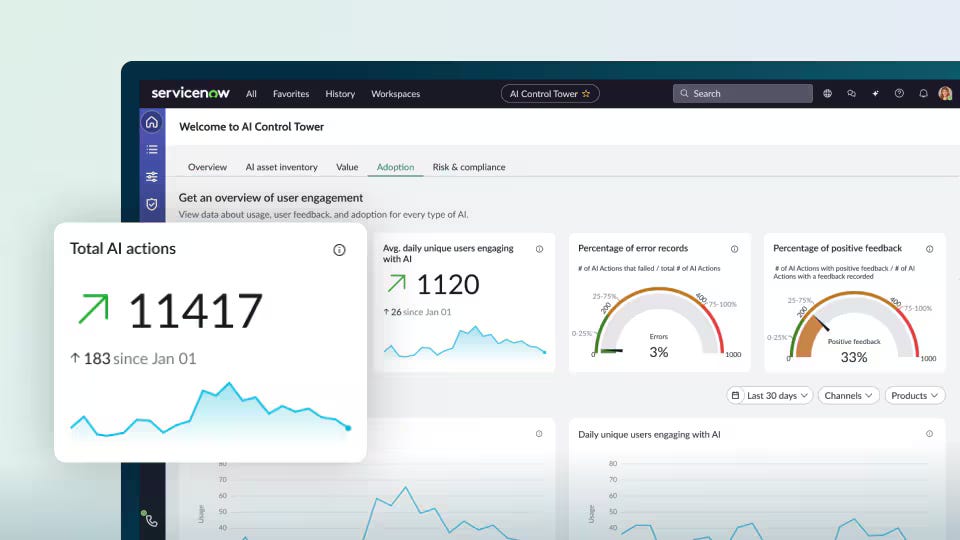
Industry analysts highlight that as AI agents proliferate, managing them becomes as critical as managing human workforces. The AI Control Tower addresses this by centralising strategy, governance, lifecycle management, and compliance-helping enterprises align AI initiatives with business goals and maximise ROI. Gartner forecasts that by 2028, organisations using AI governance platforms will achieve significantly higher customer trust and compliance scores, underlining the importance of robust AI orchestration.
For our business, already a ServiceNow customer, this development is highly relevant. The AI Control Tower could enable us to oversee all our AI assets-across departments and platforms-from a single dashboard, ensuring security, compliance, and business alignment. With the potential addition of AI Agent Fabric integrated with Azure Foundry, we could seamlessly integrate and orchestrate both ServiceNow and third-party AI agents, accelerating our digital transformation and ensuring we realise measurable value from every AI initiative.
5. WTF is Artificial Intelligence
Watch this video. No, really, watch (or listen to) it.
This episode of "People by WTF" features Nikhil Kamath in conversation with Yann LeCun, one of the foundational figures in artificial intelligence and the Chief AI Scientist at Meta. LeCun, often called a "godfather of AI," shares his journey from his upbringing near Paris to becoming a leading academic and industry voice. The discussion opens with reflections on the difference between engineering and science, the collaborative nature of scientific progress, and LeCun’s views on the role of intelligence in solving global challenges.
The video is a deep dive into the fundamentals and evolution of AI, demystifying concepts like machine learning, deep learning, reinforcement learning, and self-supervised learning. LeCun explains the historical split between rule-based "good old-fashioned AI" (GOFAI) and learning-based approaches, illustrating how modern breakthroughs like neural networks and transformers emerged. The conversation also covers the limitations of current large language models (LLMs), the need for new architectures (such as JEPA), and the future trajectory of AI towards systems that can learn from video and understand the physical world - moving closer to human-like intelligence.
This episode is highly recommended for anyone seeking a clear, authoritative perspective on where AI is headed and what skills or strategies are most relevant today. LeCun’s insights are particularly valuable for understanding not just the technology, but also the broader societal and business implications - such as the rise of open-source AI, the importance of domain-specific fine-tuning, and the changing nature of work as AI systems become more capable.
For our business, this conversation is especially relevant as we navigate the rapid integration of AI into our products and operations. LeCun’s emphasis on open-source platforms, the importance of vertical expertise, and the need for ongoing education align closely with our strategic priorities. Watching this video will help our teams stay informed about foundational AI concepts, anticipate future trends, and identify new opportunities for innovation and competitive advantage.

POB’s closing thoughts
The AI 2027 article last week certainly gave plenty of things to consider, and I came across a similar forward-looking piece this week, “The Intelligence Curse”, which is also an interesting read.
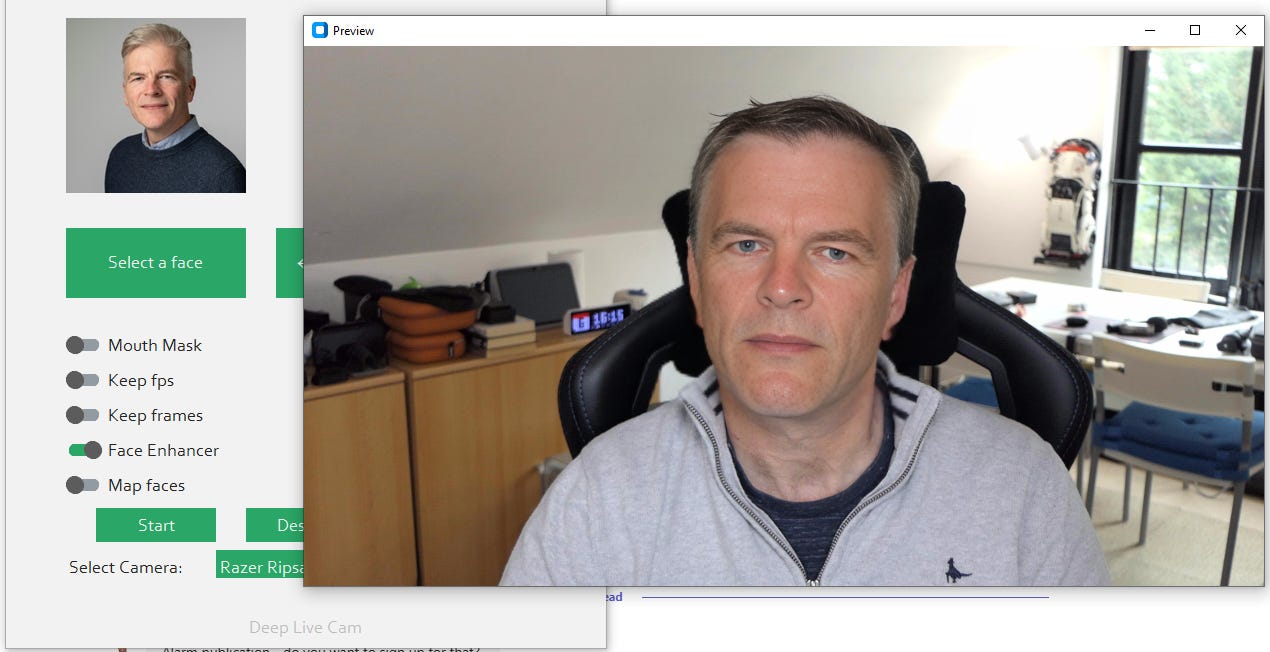
I’ve talked previously about how AI potentially enables fraud in the future, through generating video and audio in real-time. This is non-trivial currently but becomes far more accessible to bad actors as AI capabilities increase and hardware becomes more powerful. This week I’ve been looking at DeepLiveCam and Pickle, the former is an Open-Source project, the latter is a commercial product - ‘AI Self makes you look your best’. The DLC live video is very disconcerting (sorry John)!
In EAIW #6 I mentioned the rumour of OpenAI buying Windsurf. Bloomberg is now reporting this as a done deal, albeit there is no official announcement yet.
Regular readers will know I have created a Teams channel to discuss topics mentioned in this post, and AI in general, with your fellow readers, and of course me too. To join, use this link.
I also post the things that made my Pocket list, but didn’t make it to the post - ‘EAIW Extra’ - to Teams, however I am considering moving this to an additional Substack post, which won’t be posted out but will be available in the app or on the Substack website. Stay tuned.
Thanks for reading, enjoy the rest of your week and have a great weekend. 👍
Thanks for reading and I’d love to hear your feedback on whether you enjoy reading the Substack, find it useful, or if you would like to see something different in a future post. Remember, if you have any questions around AI at Davies, you can reply to this message to reach me directly or drop a note to the AI mailbox.
Finally, remember that while I may mention interesting new services in this email, you shouldn’t upload or enter business data into any external web service or application without ensuring it has been explicitly approved for use.
Disclaimer: The views and opinions expressed in this post are my own and do not necessarily reflect those of my employer.