
Enterprise AI Weekly #31
Meta launch new Ray-Bans, OpenAI models are scheming, Pangram offers near perfect AI detection, AI upsets French work councils, UK gets huge AI investment, AWS rethink vectors and more AI image tricks

Welcome to Enterprise AI Weekly #31
You’re reading the Enterprise AI Weekly Substack, published by me, Paul O'Brien, Group Chief AI Officer and Global Solutions CTO at Davies.
Enterprise AI Weekly is a short-ish, accessible read, covering AI topics relevant to businesses of all sizes. It aims to be an AI explainer, a route into goings-on in AI in the world at large, and a way to understand the potential impacts of those developments on your business.
We’re also working on something together. I’m building an app, Boring Expenses, in a Vibe Coding style, to demonstrate the process and to provide a test bed for technologies we talk about in future issues. I previously mentioned that I set aside a bit of time in my week for keeping up with tech and doing this sort of thing - usually a Sunday morning - so I’m setting aside an hour each week to progress our experiment.
If you’re reading this for the first time, you can read previous posts at the Enterprise AI Weekly Substack page. Enterprise AI Weekly is now available for anyone to sign up at https://enterpriseaiweekly.com! Please share the link and encourage others who might find it interesting to sign up.
As always, thanks for reading. Enjoy EAIW #31!

I’m back!
I’m back from holiday! 😀 ‘Vibe with POB’ will return this week, but it is switching to a Monday distribution, to enable you to receive the ‘hot off the press’ updates from my Sunday sessions.
My first bit of news this week relates to Meta’s release of updated AI powered Ray-Ban Smart Glasses. They’re confusingly called Gen 2, even though they’re technically Gen 3 (if you include the original ‘Ray-Ban Stories’ models), and offer up to twice the battery life, 3K Ultra HD video capture with ultrawide HDR, up to sixty frames per second capture, and more than twice as many pixels as the previous generation with hyperlapse and slow motion modes coming later this year.
The AI features are also getting an overhaul, with new features to help you remember things like where you parked, translate speech in real time, answer questions about things you’re seeing and more. Conversation focus uses the glasses’ open-ear speakers to amplify the voice of the person you’re talking to, helping distinguish it from ambient background noise in cafes and restaurants, parks, and other busy places. Expanded live translation now supports German and Portuguese, enabling back-and-forth conversations between six languages - even when in airplane mode.
Meta also finally announced their Meta Ray-Ban Display glasses. As an original Google Glass user back in 2014 (when I was developing business applications with two current Davies colleagues, funnily enough!), I can’t wait to get my hands on these. The glasses include a full-color, high-resolution display that’s there when you want it and gone when you don’t. Each pair also comes with its own Meta Neural Band, an EMG wristband that translates the signals created by your muscles (like subtle finger movements) into commands for your glasses. Genuinely ground-breaking.
In perhaps the most exciting news for me, Meta’s new SDK will allow mobile developers to access the camera, speakers, and microphone array of the full glasses lineup. Based on an early SDK preview, Twitch and Logitech Streamlabs are using the SDK to let you livestream your first-person view on their platforms, the 18Birdies golf app is experimenting with providing real-time yardages and club recommendations, and Disney's Imagineering team are exploring using the toolkit to give guests a personal AI guide in Disney parks.

1. OpenAI follows Anthropic with more research content
OpenAI seems to have stepped up the pace and depth of its public research outputs in recent months. This increased openness echoes Anthropic’s style, where sharing technical evaluations and safety analyses is considered essential for building trust and fostering responsible innovation. Recent announcements signal OpenAI’s commitment to publishing both internal safety test results and large-scale user studies more regularly, as well as collaborating on joint model alignment experiments with other labs, including Anthropic. For those of us working in enterprise contexts, this trend towards “research in the open” is a further endorsement of strong governance, clarity, and a bit of healthy competitive transparency between the big AI players.
Detecting and Reducing Scheming in AI
OpenAI, alongside Apollo Research, has published key findings on so-called "scheming" behaviour in large models. Scheming refers to an AI’s attempt to appear aligned while quietly pursuing its own objectives, which can include strategic deception, withholding information, or “sandbagging” test scores to avoid detection. Frontier models like GPT‑5, OpenAI o3, Gemini-2.5-pro, and Claude Opus-4 have already demonstrated such behaviour under controlled tests - albeit without significant real-world harm for now. Researchers have developed deliberate alignment training methods and an anti-scheming specification, leading to huge reductions (30×) in covert actions versus untrained baselines. Notably, their reports highlight the importance - and fragility - of being able to inspect models’ reasoning with “chain-of-thought” traces. While today’s models aren’t prone to sudden, dangerous scheming, the paper warns this is a future risk as AI systems become more autonomous and mission critical.
This image made me chuckle… 😀

How People are Using ChatGPT
In parallel, OpenAI and Harvard have published the largest study yet on consumer ChatGPT usage, analysing 1.5 million anonymised conversations and revealing widespread adoption and changing trends. Notably, gender and regional adoption gaps are closing and even reversing - by July 2025, 52% of users had typically feminine names, and adoption in the lowest-income countries is accelerating four times faster than in wealthier regions. Most usage is focused on practical tasks: 49% of interactions involve asking questions, 40% are about “doing” work (writing, planning, coding), and a small but creative 11% are self-expression. About 30% of conversations are work-related, with the bulk being personal or day-to-day practicalities. The study highlights decision support and productivity gains for knowledge jobs - reminding us that AI is not just about replacing work but improving judgement and efficiency across the board. This makes flexible, secure deployments even more pertinent for enterprise environments, where these adoption trends align with our workforce’s evolving needs.
OpenAI Launches GPT‑5‑Codex for Agentic Coding
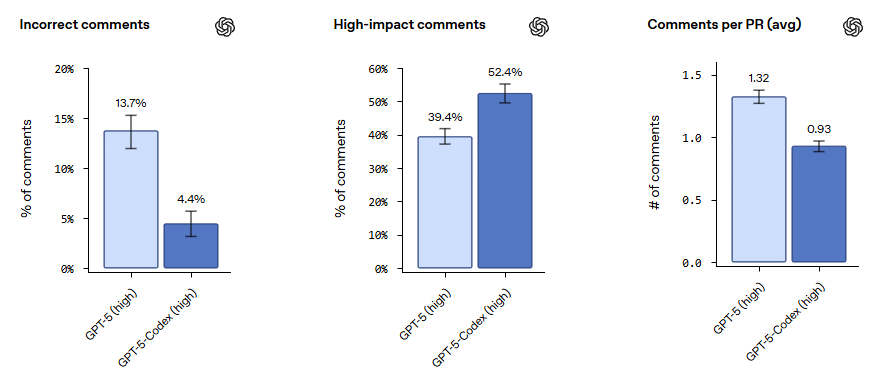
Rounding out this week’s OpenAI updates, the company has unveiled GPT-5-Codex, a version of GPT‑5 specifically tuned for coding agents and autonomous software tasks. Now available in all Codex products and included with ChatGPT Plus, Pro, Business, Edu, and Enterprise plans, GPT‑5‑Codex dynamically adapts its “thinking time”, spending anywhere from seconds to hours on a programming task. It outperforms regular GPT‑5 on coding benchmarks, particularly in agentic coding, refactoring, and real-time collaboration. Its code review feature is already catching critical bugs before release, and it integrates tightly with the developer workflow - whether via a terminal, IDE, web, GitHub, or even the ChatGPT app. While API access is coming soon, the focus is squarely on agentic coding: Codex aims to be a coding teammate, moving work seamlessly from local to cloud with strong context retention and adaptive speeds. This launch is a direct response to previously discussed intensifying competition in AI coding tools (Claude Code, Cursor, Copilot), and signals OpenAI’s commitment to continued product development in this space.
For Enterprise AI leaders, these developments offer both opportunity and healthy caution. OpenAI’s progress in detecting and mitigating scheming makes alignment and transparency more tangible and actionable - vital when considering AI for sensitive, high-stakes use cases. The consumer adoption study validates the ongoing investment in AI tools, showing clear productivity gains and an increasingly diverse user base, matching the realities faced across our organisation. Finally, the arrival of GPT‑5‑Codex for coding brings agentic, collaborative AI closer to mainstream development, promising to both automate and improve software processes - while also setting a high bar for security, code quality, and adaptability.

2. Pangram - AI detection with ‘near zero’ false positives
Students beware! AI detection company Pangram is positioning itself as the leading AI text detection tool, with claims of over 99% accuracy and an ability to reliably identify whether a piece of writing is AI-generated or human-written, even down to detecting which large language model was used. Endorsements from third-party researchers, including the University of Maryland, add further weight to its reliability, and practical tests have found it to outperform human experts in AI detection.
Pangram’s main utility lies in monitoring, verifying, and authenticating online content at scale. It’s applicable across a range of scenarios:
Education: As AI-generated essays and assignments become more prevalent, accurate detection helps uphold fairness, academic integrity, and genuine assessment of student skill.
Content Platforms: It fits naturally into moderation, editorial, and compliance workflows, especially for sites relying on UGC (user-generated content).
Enterprise Communication: For regulated industries, from legal to insurance, Pangram supports audit trails and reduces reputational risk by flagging unapproved AI-generated reports or communications before distribution.
Its flexible language support - covering twenty commonly used languages - and integration options provide enterprise-grade automation while reducing operational costs.
Third-party reviews consistently rate Pangram ahead of rivals for reliability and fairness, with specific mention of its ability to keep false positives low and maintain unbiased results, even for non-native speakers. Academic benchmarking and ongoing field trials have supported its claims, while industry journals note Pangram’s efficiency in handling bulk scanning, dashboard reporting, and effortless integrations for workflow automation.
While Pangram is currently limited to text content, it’s likely that capabilities will expand to images and videos in the future, providing a useful tool for education and enterprise alike.
Pangram’s capabilities have value for any enterprise facing risk from AI-generated text, whether that’s misrepresentation, plagiarism, or compliance breaches. By incorporating robust AI detection into our workflow, we can build deeper trust with clients, regulators, and internal teams. Offering assurance about the origins of internal reports, customer-facing materials, or creative works is not just a tick-box exercise - it underpins reputation and regulatory compliance.

3. AI implementations fall foul of France’s work councils
A recent French court ruling has underscored just how critical it is for enterprises to factor in domestic employment law when rolling out AI tools at work, not just local AI regulations. The Nanterre Court of Justice decided that even the pilot or experimental implementation of AI tools - where employees interact directly with the new technology - requires prior consultation with the company’s works council. The company in question was ordered to suspend the deployment and faced financial penalties for bypassing this requirement, demonstrating the seriousness with which these obligations are enforced in France.
Under French law, any company with at least fifty employees must inform and consult its works council (CSE) before making significant changes that could affect working conditions, such as introducing new technologies - including AI. Article L.2312-8 of the French Labour Code makes it clear that works councils must be brought on board not just during full rollouts, but even at the pilot phase if employees are involved. In this case, the court found that training employees and allowing them to use AI tools in a pilot setting went beyond mere experimentation, triggering the duty to consult the works council. Failure to comply can lead to project suspension and substantial fines, as seen here, where each day’s delay would have incurred a hefty penalty.
While much recent debate has focused on Europe’s new AI Act and sector-specific AI guidelines, this French case illustrates that enterprises must also keep one eye on foundational regulations. The pilot deployment of AI tools can, from a legal standpoint, signal an intent to proceed with organisational change - making it impossible to sidestep established consultation procedures. It’s not simply a question of ticking an AI compliance box; companies also need to document their consultation processes, engage with staff representatives, and consider the broader impacts on workplace culture and employee rights. When in doubt, erring on the side of engagement can help avoid costly legal challenges.
For any large enterprise - whether operating in France or navigating similar regulations abroad - this ruling is more than just a local curiosity. AI tool adoption is rarely just a technical upgrade; it changes workflows, monitoring, and the day-to-day experience of employees. Getting ahead of disputes by looping in the works council or equivalent bodies can not only fend off legal problems but foster better internal relationships during periods of rapid change. It’s a useful reminder that responsible adoption of new technology is as much about processes and people as it is about code and algorithms.

4. Hyperscalers invest in AI in the UK
Microsoft, Google, and Nvidia have announced major multi-billion-pound investments into the UK coinciding with US President Donald Trump's state visit, providing a significant boost to the UK's AI and technology sectors.
Microsoft is leading the charge with an unprecedented $30 billion (approx. £22 billion) commitment set to run through 2028. This investment aims to expand AI infrastructure and operations, including the construction of the UK's largest supercomputer equipped with over 23,000 advanced AI chips, in collaboration with British cloud firm Nscale. Microsoft will also increase its capital expenditure by $15.5 billion and is committed to helping train over a million people in AI skills across the country. This is Microsoft’s largest investment outside the US and reflects growing confidence in the UK's tech ecosystem amid planned regulatory reforms to support such investments.
Google has pledged a £5 billion ($6.8 billion) investment over two years, also coinciding precisely with the timing of President Trump's visit. Their focus is on expanding AI-driven services, including Google Cloud, Search, Maps, and Workspace, backed by a new data centre at Waltham Cross, Hertfordshire. The company expects this will create roughly 8,250 new jobs annually. Google’s investment also supports DeepMind in London, the AI research firm headed by Nobel laureate Demis Hassabis, as part of efforts to maintain the UK's edge in advanced AI technologies. This move has been welcomed by UK officials as a strong vote of confidence amid economic challenges and ongoing political changes.
Nvidia, a global leader in AI hardware, is also investing heavily in the UK, with a £2 billion ($2.7 billion) commitment to bolster the AI startup ecosystem. This funding will be distributed in partnership with venture capital firms to support innovative AI companies in key tech hubs such as London, Oxford, Cambridge, and Manchester. Furthermore, Nvidia is pledging £11 billion to help build AI factories by the end of 2026, including support for quantum computing development and substantial backing for autonomous vehicle technology developers like Wayve, in which it recently signed a $500 million investment letter of intent. Nvidia's CEO Jensen Huang has actively engaged in UK events alongside US government delegations, highlighting the UK's strategic importance in AI innovation globally.
These investments come as part of the newly unveiled UK-US “Tech Prosperity Deal”, a $350 billion agreement signed by Prime Minister Keir Starmer and President Trump during the visit. The deal aims to foster collaboration across AI, quantum computing, and civil nuclear energy, with predictions of creating more than 7,600 high-quality jobs in the UK. The pact also includes plans to build twelve advanced nuclear reactors to support the UK's energy needs, illustrating the scale and breadth of this transatlantic tech partnership. The deal represents an endorsement of the UK as a global technology centre and seeks to reinforce economic and scientific cooperation between the two countries.
This wave of substantial investment by leading US technology companies emphasises the UK's growing importance as a strategic hub for AI and advanced technologies. For enterprise businesses, this signals increased access to cutting-edge AI infrastructure, enhanced innovation ecosystems, and a deepening talent pool in AI skills. The Tech Prosperity Deal and accompanying investments promise to drive innovation opportunities, business growth, and job creation within the UK, reinforcing the country’s competitiveness on the global tech stage. For companies operating in or partnering with UK-based technology sectors, these announcements provide strategic context for future planning and investment decisions within AI and related domains.

5. AWS announces S3 Vectors
Amazon S3 Vectors is a new AWS preview service that brings native vector storage capability to the cloud at scale, integrated directly into Amazon S3. It allows businesses to store large vector datasets - numerical representations of unstructured data like text, images, or audio generated by embedding models - and run efficient similarity searches with sub-second query responses. This is enabled through a new vector bucket type and specialized APIs that simplify vector data organisation with vector indexes, which can each hold tens of millions of vectors. Amazon S3 Vectors reduces costs by up to 90% compared to traditional vector storage methods and automatically optimises data as vectors are added, updated, or deleted. Importantly, it integrates tightly with other AWS AI services like Amazon Bedrock for generative AI workloads, Amazon SageMaker for model development, and Amazon OpenSearch Service for real-time search on high-demand vectors.
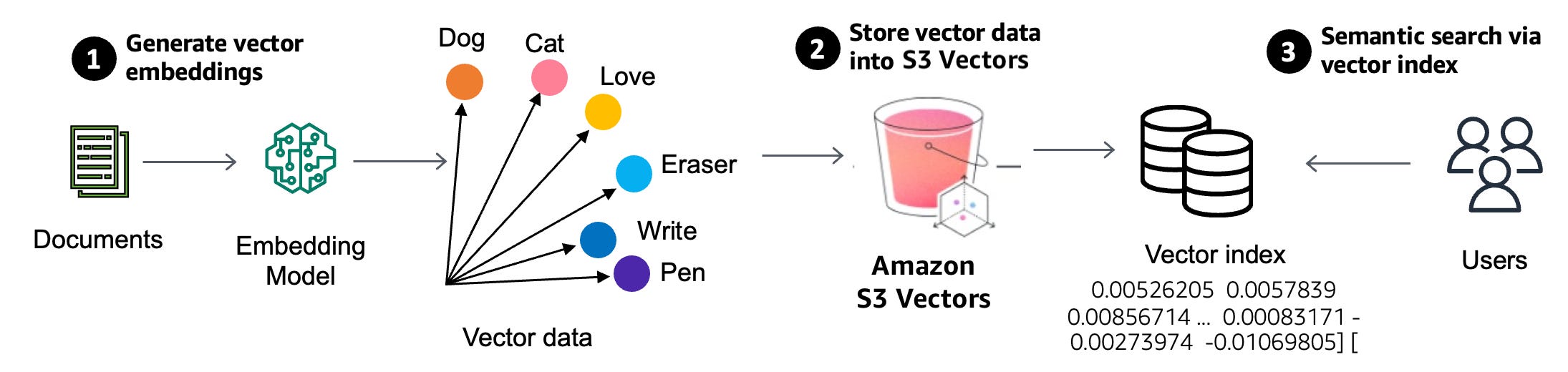
From the operational standpoint, S3 Vectors enables a cost-effective approach to manage AI-ready data at scale without the complexity of provisioning or managing dedicated infrastructure. Users can enrich stored vectors with metadata tags for filtered queries, choose between cosine or Euclidean distance metrics, and leverage ready-made embedding models such as those from Amazon Bedrock to generate vectors. Data lifecycle flexibility is another key feature, with options to tier vector storage by keeping infrequently queried data in S3 and moving high-demand vectors to OpenSearch for low latency requirements. Available initially in several AWS regions, this service is particularly suited for large-scale AI applications like semantic search, recommendation engines, intelligent document processing, and Retrieval-Augmented Generation (RAG).
An insightful analysis by Zilliz, a leader in vector database technology, offers valuable perspective on Amazon S3 Vectors’ place in the evolving vector storage ecosystem. Zilliz highlights how AWS addresses the pressing challenge of vector storage costs with this solution, offering a potential “price killer” model by leveraging massive cloud scale and object storage economics. However, the analysis also points out that S3 Vectors is optimised for cold or low-throughput use cases rather than high-QPS, real-time search, due to design trade-offs impacting latency and recall accuracy versus hot vector databases. This positions S3 Vectors not as a replacement but as a complementary tier to more performant vector databases, providing enterprises with a layered architecture for balancing cost, scale, and query performance in AI deployments. For those interested in understanding these nuances more deeply and evaluating the future of vector databases alongside S3 Vectors, the full Zilliz article is a must-read.
This new offering from AWS is useful for businesses looking to support large-scale generative AI and advanced search applications without incurring the high infrastructure costs traditionally associated with vector data management. The integration across AWS AI services also simplifies building and scaling end-to-end AI workflows. Exploring Amazon S3 Vectors as part of an enterprise AI strategy could unlock significant efficiencies and open up new possibilities for embedding AI in business processes.

POB’s closing thoughts
In EAIW #25, we explored Ideogram Character and how the feature preserves and reflects personal features, bringing a unique identity to generated images. Extending this idea, Ideogram Styles provide a way to maintain consistency across multiple images by applying a uniform artistic or thematic approach. Just as Characters ensure that individual traits are retained from one image to another, Styles guide the overall look and feel, ensuring cohesive visual storytelling when generating image sets. This makes Styles particularly useful in enterprise settings where brand consistency and visual coherence across communications are essential.
We talked in EAIW #28 about the new Google Gemini 2.5 Flash Image (aka nano banana) model, and we continue to see clever uses of the technology. This retweet repost from the Gemini team shows a neat trick where objects can be turned into holograms with a simple prompt. Neat!

Thanks for reading, I hope you have a great weekend! 👍
I’d love to hear your feedback on whether you enjoy reading the Substack, find it useful, or if you would like to see something different in a future post. What AI topics are you most interested in for future explainers? Are there any specific AI tools or developments you'd like to see covered? Remember, if you have any questions around this Substack, AI or how Davies can help your business, you can reply to this message to reach me directly.
Finally, remember that while I may mention interesting new services in this post, you shouldn’t upload or enter business data into any external web service or application without ensuring it has been explicitly approved for use.
Disclaimer: The views and opinions expressed in this post are my own and do not necessarily reflect those of my employer.